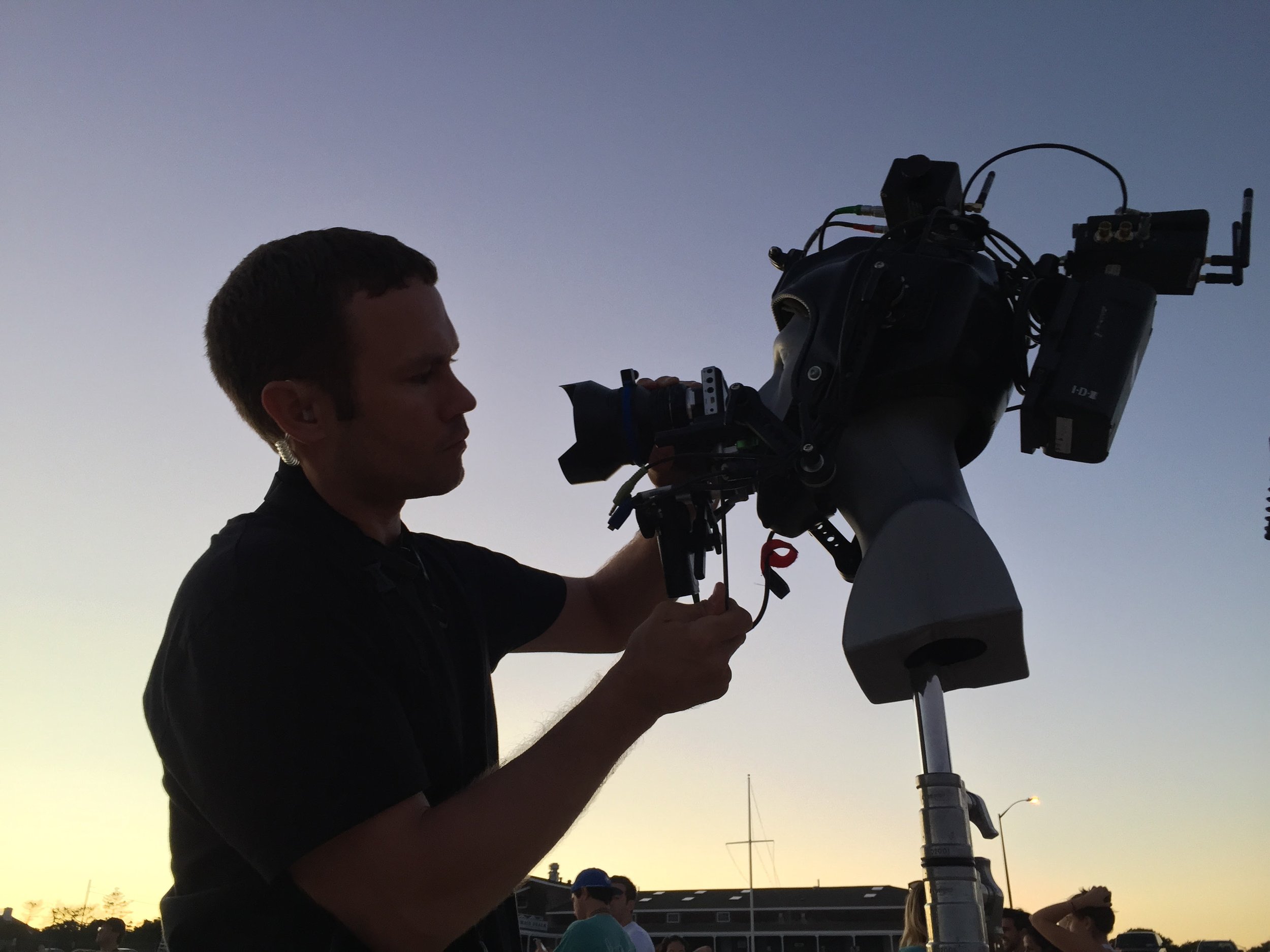
I partnered with AST Studios in NYC and filmmaker Andy Fortenbacher to design and build a custom POV camera system called the SkyRig. I had been hired as the cinematographer for the ad campaign for wireless earbud startup SkyBuds and the client wanted a POV experience. I was reluctant to use a GoPro since these systems fall well short of the cinematic quality we were going for. The BlackMagic Pocket Cinema Camera HD had just launched at the time and I believed it was the best quality-to-weight ratio for the system. Below are a few of the technical specifications that I drew up for the initial design:

Helmet
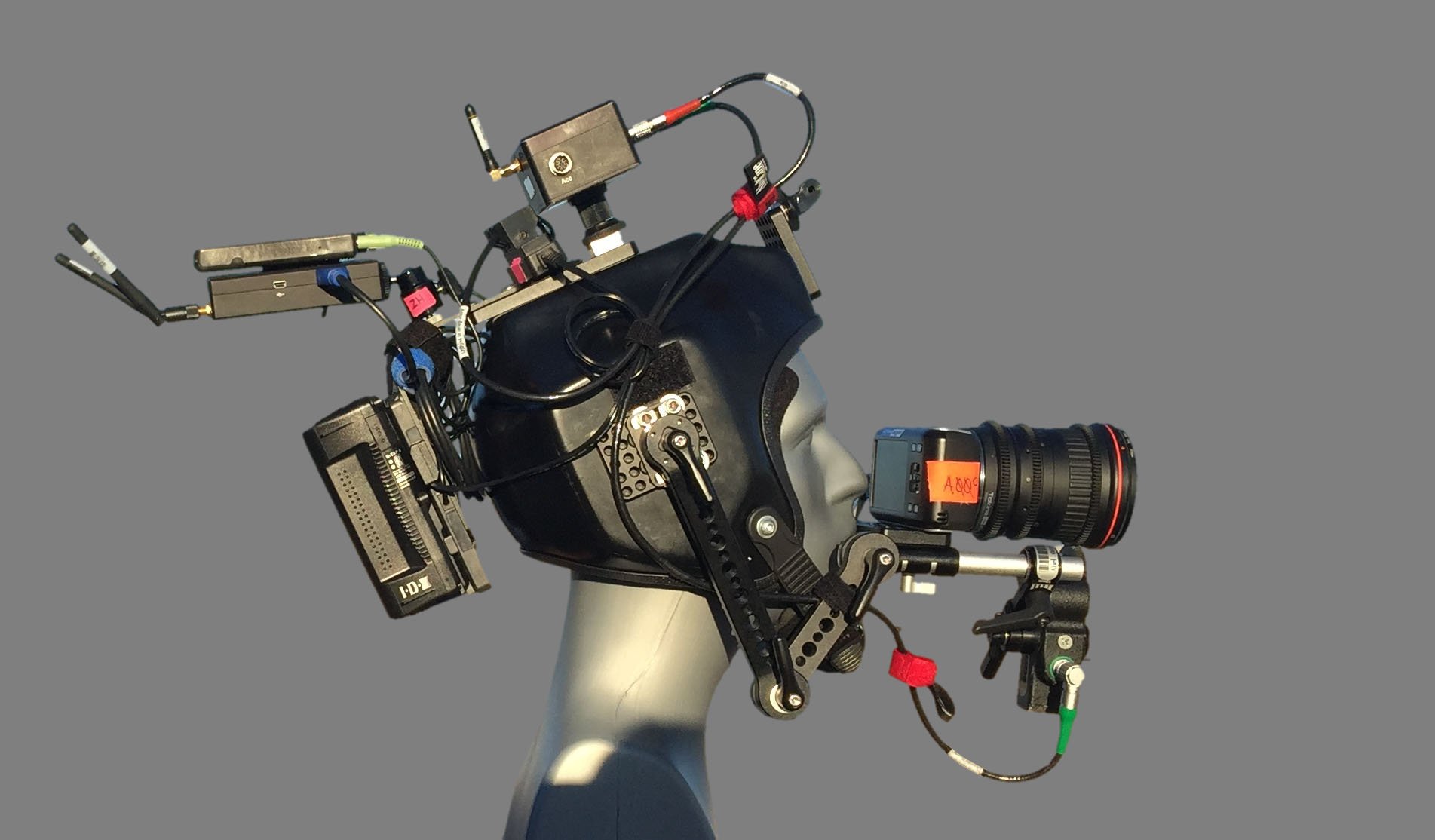
Adam Teninbaum from AST Studios ordered a rigid skydiving helmet which was designed for camera mounting, primarily GoPros for extreme sports. The helmet was constructed of rigid plastic that was 1/8th” thick which we knew we could build from. The rigid surface covered the entire sides, top, and back of the operator’s head so there were many mounting options. This would also protect the operator’s noggin during operation since visibility/situational awareness was reduced.
Camera Mount
I wanted a solid platform with a standard 3/4” screw mount which would remain rigid and safely in place during a strenuous and kinetic shoot. Our camera operator (and hand/arm model) was going to be doing everything from riding a bicycle in Manhattan traffic to riding a giant swing at a carnival. We ended up using Wooden Camera accessories since they were solid aircraft-grade aluminum which would remain rigid but not break the operator’s neck! I also requested rosettes so that once the wing nuts were tightened down, there would be no slippage. The discretized nature of the rosettes also provided a way to align the two primary mounting points on either side of the helmet.
Power Plant
One important feature that I believed was critical from the get go was a central power source which had the juice to power the entire system from a single battery but would not require having to constantly swap for fresh bricks. When the operator was in the aerial carnival ride shooting a POV, I didn’t want him to run out of power in the middle of the shot. I also didn’t want to have to mount multiple battery types using various plates and cables onto the same rig. I wanted one single power source which could also act as a counterbalance to the weight of the rest of the rig. We ended up using large V-lock batteries from IDX which slid and locked into a female V-mount plate hard mounted onto the back of the helmet. We then mounted a D-Tap 12-volt distributor which could route various 12-volt rails to the camera and accessories.
Teradek Remote HD Monitoring
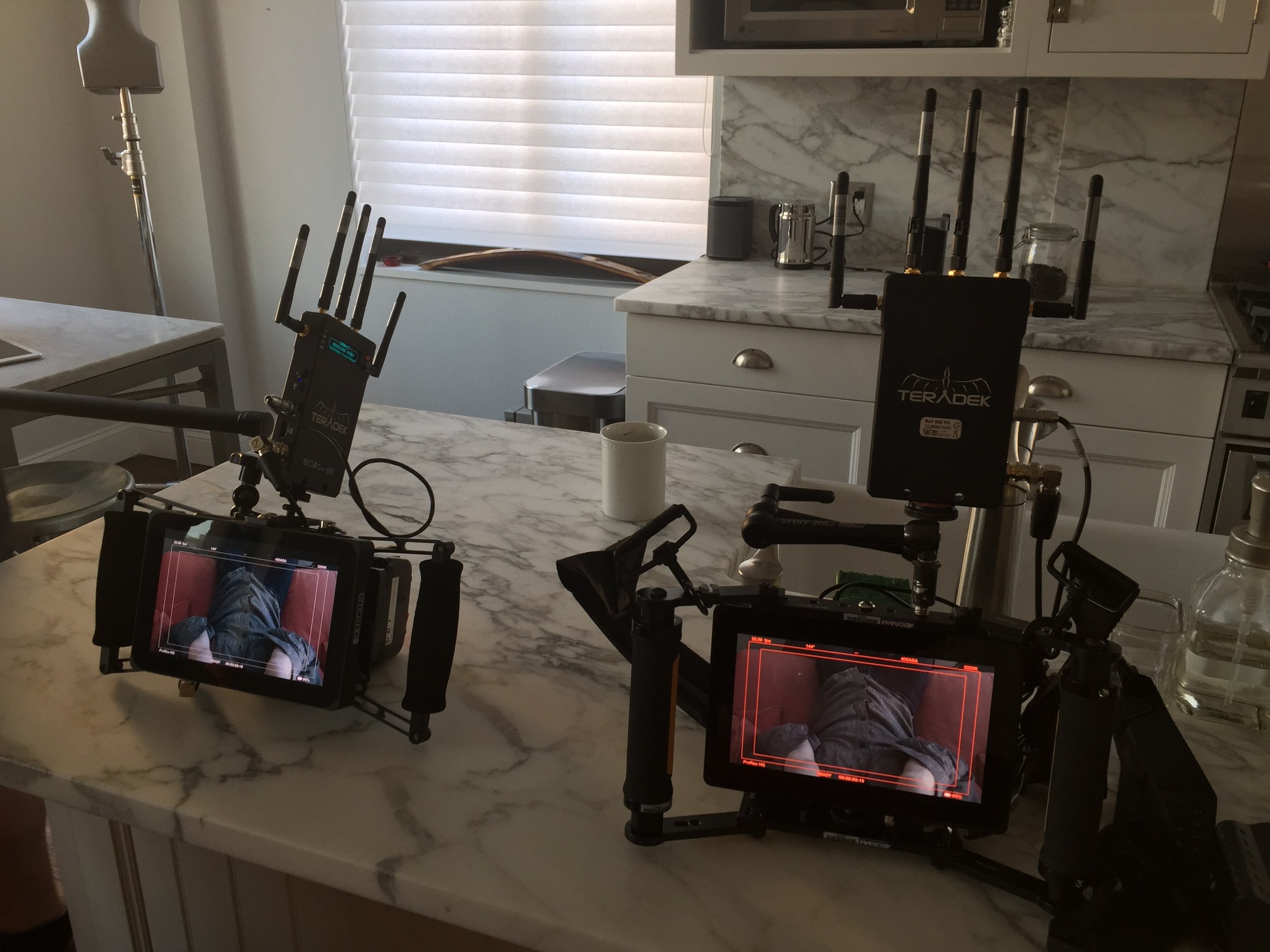
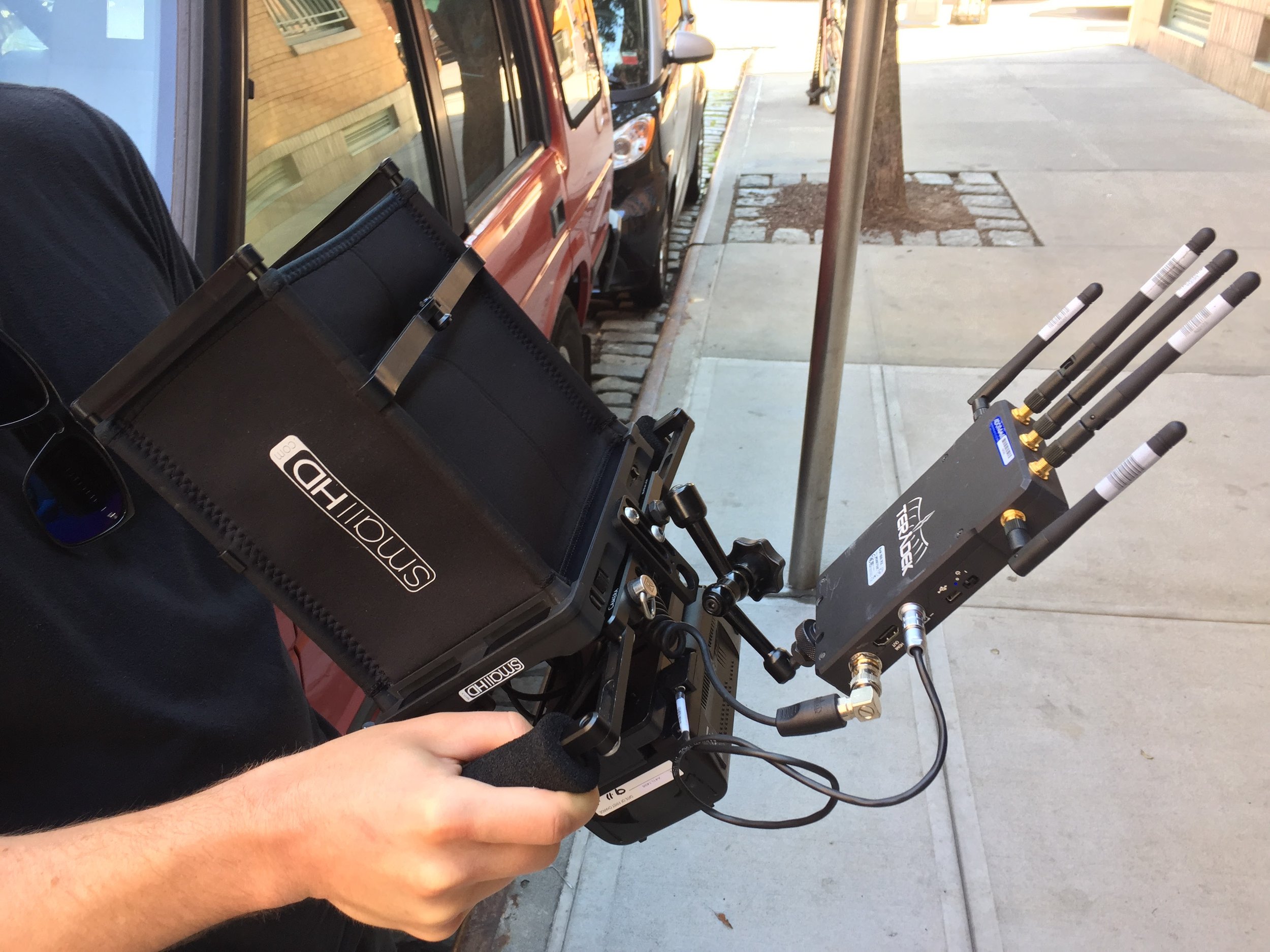
It was critical for our director Ross Thomas to be able to see a live HD feed from the camera rig at all times. So we decided to go big and mounted a Teradek Pro HD wireless video transmitter to the top of the helmet. I ordered a portable handheld director’s monitor with a Teradek receiver so that Ross could walk around and talk with the talent all while seeing a live HD signal from the camera. We also had another receiver mounted to a larger HD monitor for video village. This way the other departments could keep eyes onto the image.
Remote Follow Focus
Since we were using cinema glass and focusing on objects in the foreground as well as deep background, I needed my camera assistant to have the ability to pull focus without touching the rig. I wanted to open my iris enough to soften the background so Andy Fortenbacher designed a tiny rail system which his Arri remote follow focus could be mounted. The system needed to be responsive down to tenths of a second so we had to do some testing.
Special Thanks
Although I designed the initial layout for the system as per the requirements for the job, Andy Fortenbacher and Adam Teninbaum custom ordered all of the parts and supervised the machining when needed. It was a truly collaborative technical project which addressed a need for a system which was unavailable on the market at the time. There were one or two other companies which had built similar systems but fell well short of the production value required to meet our needs.
You can watch the final commercial for SkyBuds here: